Shipped
02
both still live
 WarrenBarr
Not templates and not mockups. Both of these are live, both were built from an empty folder, and both are doing real work for a real business right now. Here is what is inside them.
A historic 1912 downtown hotel with a direct-booking system it actually owns — instead of renting the customer relationship back from an OTA.
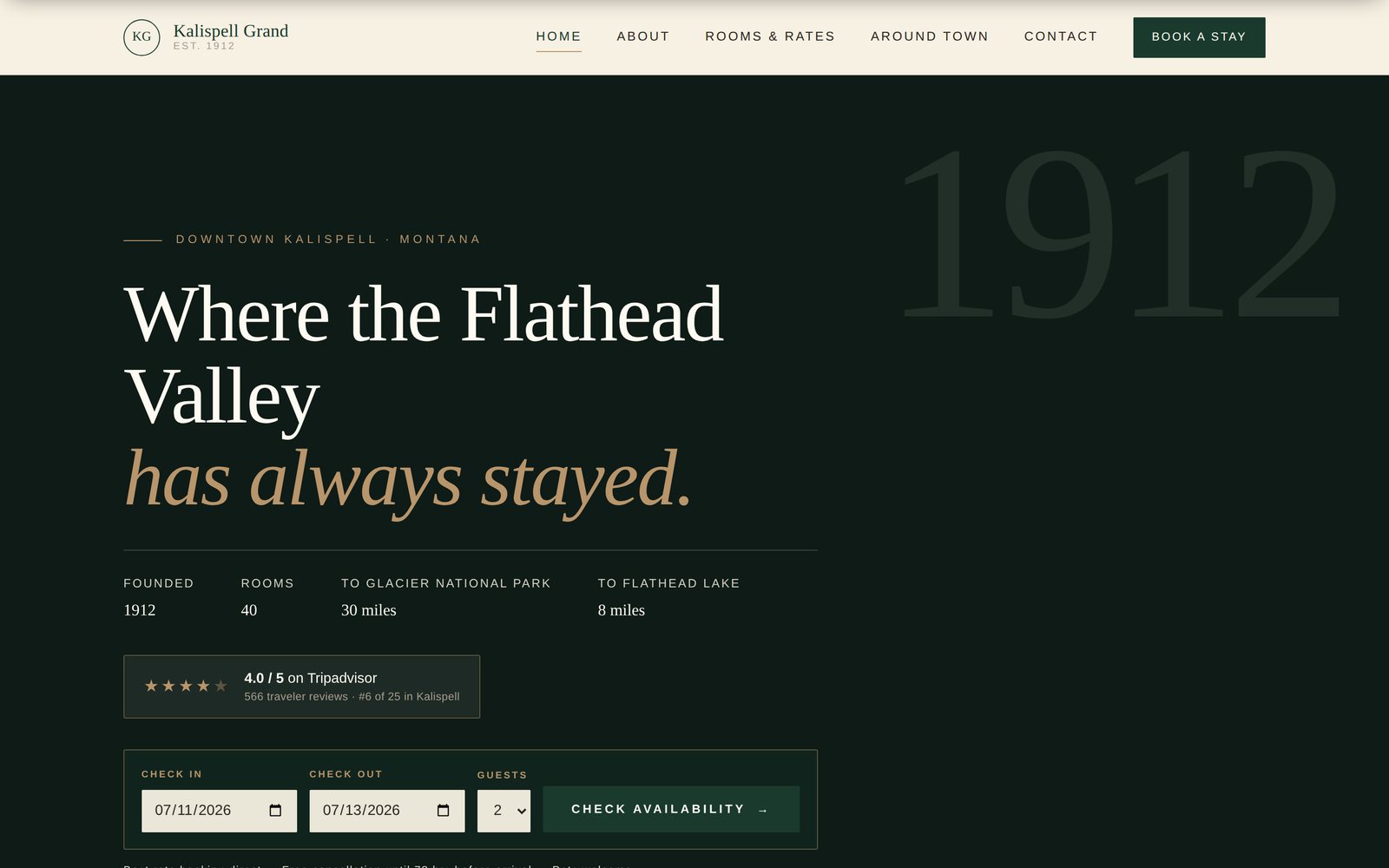
A full hotel website with a custom guided booking engine, a staff-facing property-management dashboard, an in-browser site editor, and a library of Glacier National Park trip guides built for search.
Not a template — a working reservation funnel wired to swap straight into the live PMS backend. The hotel keeps the booking relationship instead of renting it back from an OTA at fifteen percent.
A one-man detailing business that now runs entirely from a browser — bookings, clients, pricing and schedule, all owned by the operator.
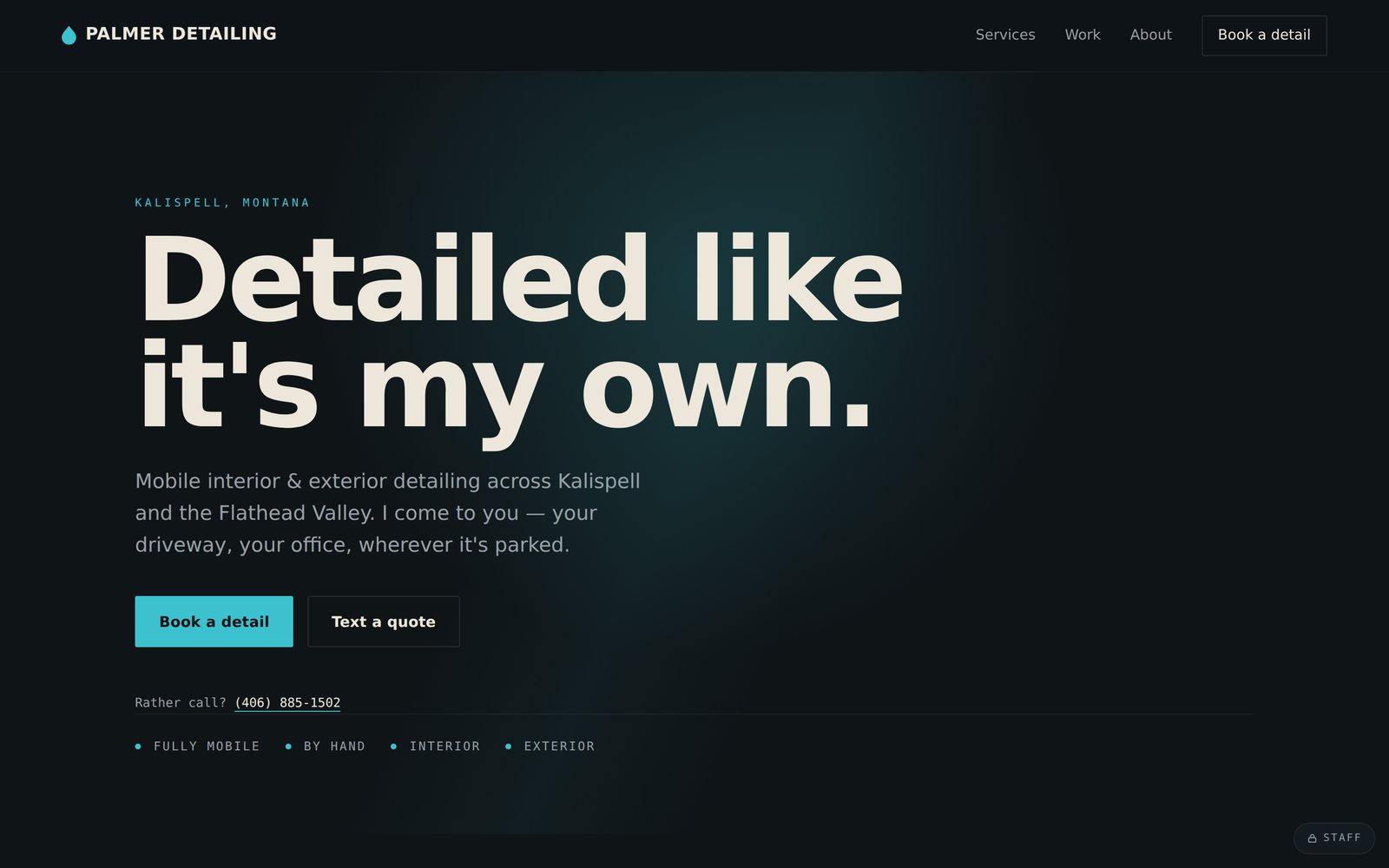
Not just a site — a full-stack web app. A fast public booking front end backed by a secure staff dashboard: clients, scheduling, live pricing, and customer self-booking on a real authenticated serverless backend.
The public site pulls live data Palmer controls himself. Zero hardware to maintain, and nothing that stops working if I disappear.
That is not a fun fact on a bio page. It is the reason the login is where it is, the reason the customer list is not sitting in a third party's database, and the reason there is no plugin stack quietly accumulating vulnerabilities behind your booking form.
Most people who build small-business websites have never had to get into one. I publish security advisories under my own name — you can read exactly how I think before you decide to hire me.
No theme, no page builder, no twelve plugins each with their own CVE history. Every line is one I chose to put there, which means every line is one I can explain.
Bookings, customers, logins — hosted in your name, exportable any day. If you ever stop working with me nothing switches off and nothing gets held hostage.
Not a ticket queue, not a chatbot, not a level-one script. The person who wrote the code is the person who answers when it matters.
“A website is just an application with a nice front door. Somebody is going to try the handle. It should be me, first, on purpose.”
There is nothing wrong with a template if a template is genuinely all you need — and I will tell you when it is. The problem is being sold a subscription when what you actually needed was a system you own.
What the business actually needs to do online. Sometimes the answer is smaller than you expected, and I will say so.
Scope and price agreed before anything starts. No hourly meter, no discovery phase that bills while nothing ships.
You see it working on real infrastructure, not as a slide. Changes happen while it is being built, not after launch.
In your accounts, in your name, with the admin access and a walkthrough. Then I stay reachable.
From a simple fast business page to a full booking engine with a backend — built by an engineer who also secures what he ships.