[ 02 // THE BOOKING ENGINE ]
Booking, Done Direct
This is the part that matters to a hotel's bottom line. Every booking that comes through the site directly is a booking that didn't lose 15–20% to a travel platform. So the booking flow had to be good enough that guests actually use it.
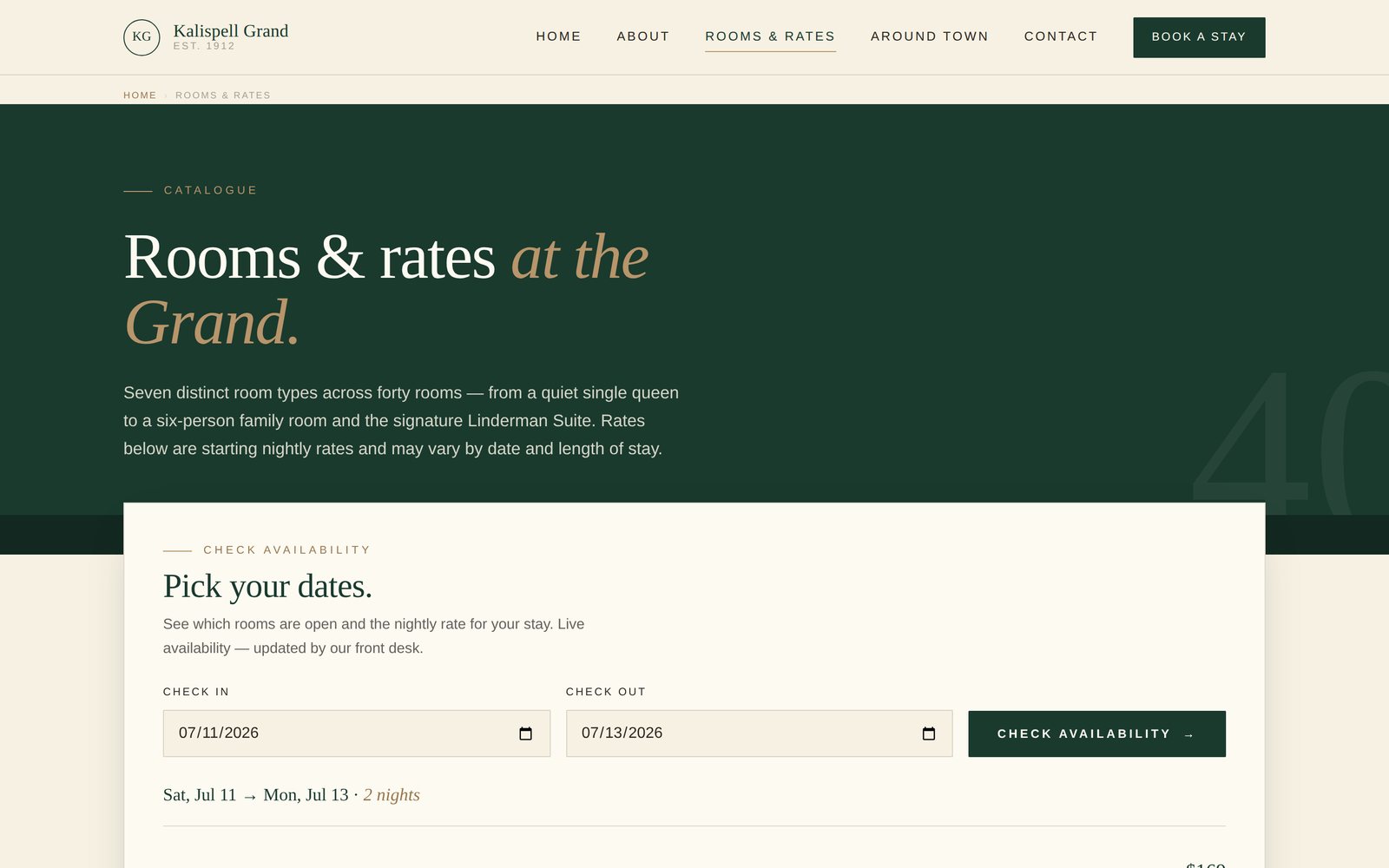
I built a guided, single-view flow: pick your dates and party size up top, and the available rooms render live below as a horizontal wheel — showing only the rooms that are actually open for those dates and big enough for the party. Change an input, and it re-renders instantly. No dead ends, no "call to check availability."
kalispellgrand.com/book
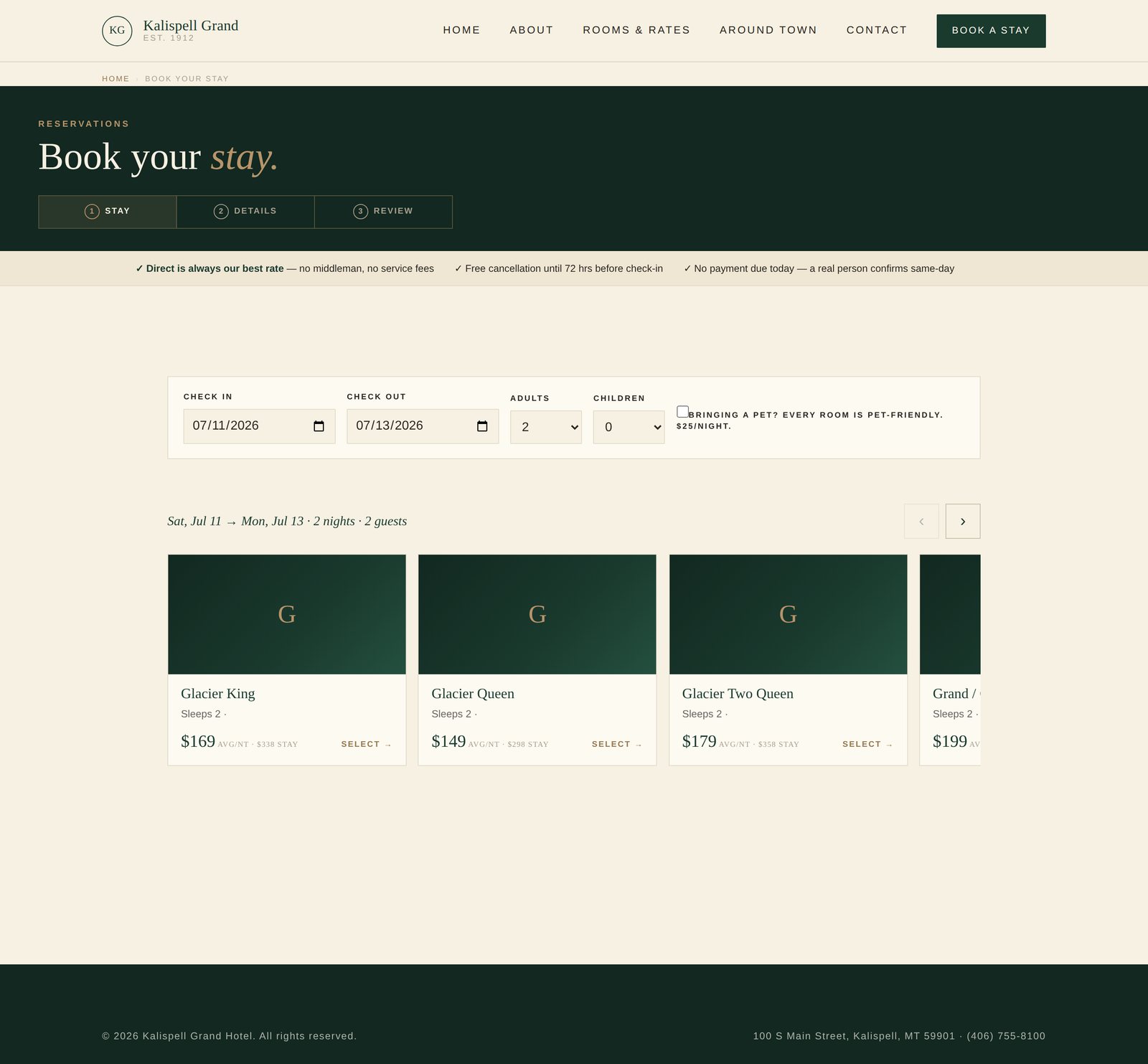
The booking engine — dates and party on top, a live-filtered room wheel below, then a clean 3-step funnel: Stay → Details → Review & Send.
Built to plug into the real backend
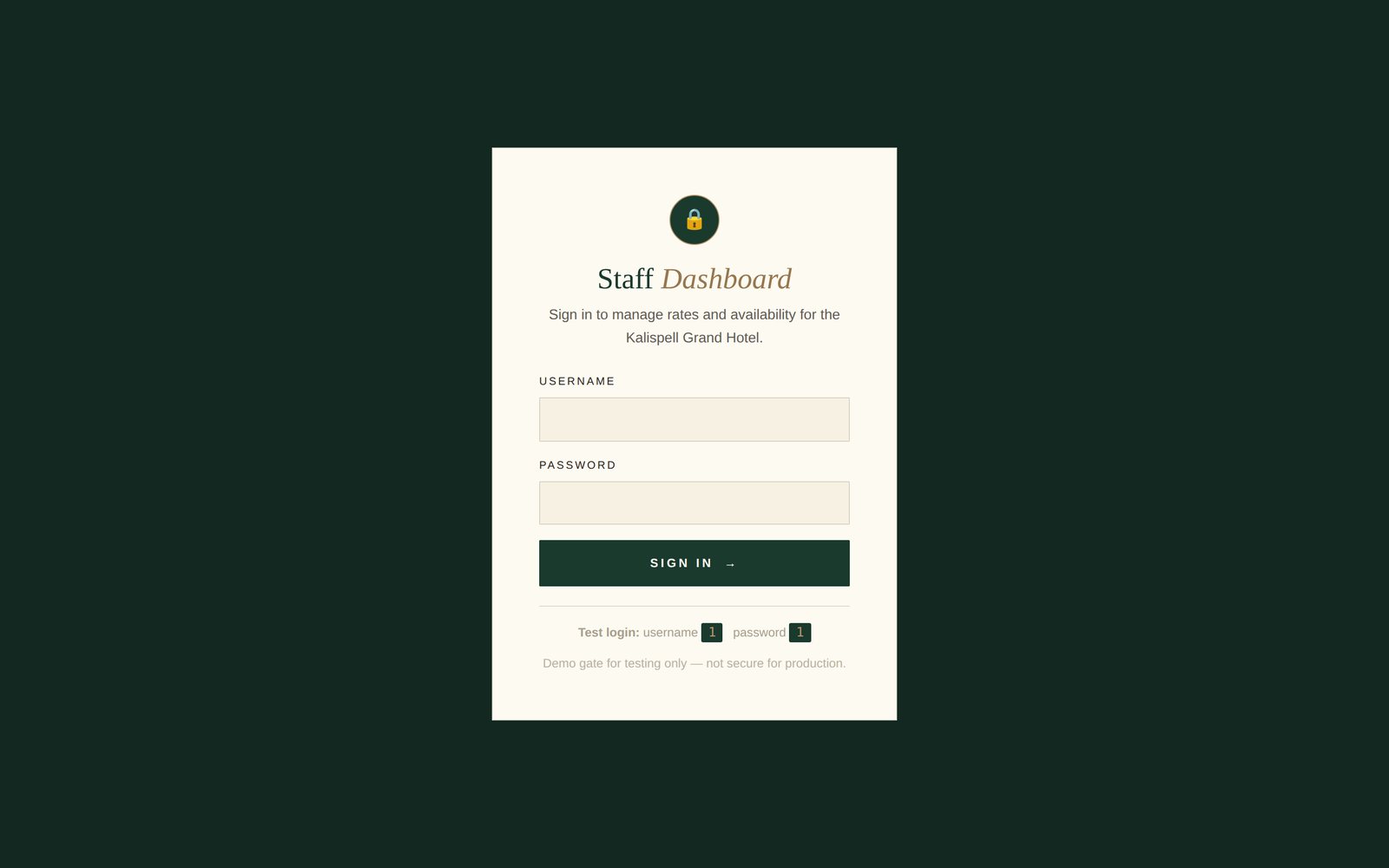
The whole availability system is architected around a single swap-point — one clearly-marked function that returns which rooms are open. When the Deming by Design property-management backend goes live, its API drops straight into that one spot and the entire booking funnel goes real-time. Nothing else has to change. That's deliberate engineering, not a demo.
 WarrenBarr